Understanding Microphone Polar Patterns
Understanding Microphone Polar Patterns
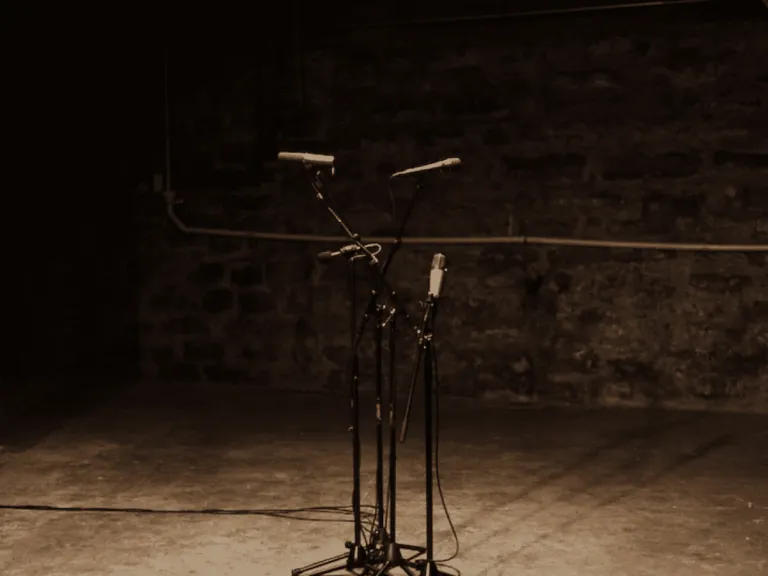
Sound engineers need a solid grasp of microphone polar patterns to make sure they’re choosing the right mic for the job, since each pattern comes with its own characteristics and strengths. We’ll take a close look at each of these microphone pickup configurations, weigh their pros and cons, and cover XY pairing and how it’s used to build a stereo image. Omnidirectional microphones pick up sound from every angle, making them the most versatile mic type. Figure-8 microphones are most often used in stereo recording, since they capture sound from the front and back while rejecting sound from the sides. Cardioid, supercardioid, and hypercardioid microphones are also common, each with its own pickup shape and rejection capabilities. Finally, XY pairing is a technique used to create a stereo image with two microphones.
1. Omnidirectional Polar Pattern
An omnidirectional polar pattern is the most basic type of microphone pickup configuration. It picks up sound equally from every direction, including front, back, sides, and above. This pattern is ideal for capturing sound across a wide area, such as a room. It’s also the most natural polar pattern, since it captures every sound source in the environment without any directional bias. Examples of microphones that come in omnidirectional versions include figure-8, cardioid, supercardioid, and hypercardioid models, as well as XY microphone pairs.
2. Figure-8 Polar Pattern
The figure-8 polar pattern, also known as a bidirectional pattern, is a directional microphone that picks up sound from the front and back while rejecting sound from the sides. This type of microphone is often used to record singers (with one person standing between two microphones in an XY pair) or for interviews where two speakers face each other. Compared to the omnidirectional pattern, the figure-8 pattern rejects more background noise and is more sensitive to off-axis sources. However, it doesn’t reject sound from the sides as effectively as cardioid, supercardioid, and hypercardioid patterns do.
3. Cardioid Polar Pattern
The cardioid polar pattern is the most commonly used pattern in most studio applications. It picks up sound primarily from the front while rejecting sound from the rear by up to 20 dB. This makes it an excellent choice for capturing vocals, guitars, and other single-source instruments. When used in an XY pair, the cardioid pattern is ideal for capturing sound sources with a wide stereo image, such as a piano or drum kit. Cardioid directivity is also well suited to recording in less-than-ideal acoustic environments.
4. Supercardioid Polar Pattern
The fourth microphone polar pattern is the supercardioid. It’s a variant of the cardioid configuration, also known as a directional microphone setup. This pattern picks up sound from the front with a narrower pickup range on the sides. Compared to omnidirectional, figure-8, and cardioid patterns, the supercardioid is more directional and requires closer proximity to the sound source. This configuration is commonly used on live sound systems, as well as on overhead mics and drum mics. The supercardioid pattern is also sometimes paired with a hypercardioid or used in an XY configuration.
5. Hypercardioid Polar Pattern
The fifth and final microphone polar pattern is the hypercardioid configuration. This highly directional pattern is ideal for recording audio in noisier environments, since it picks up sound from the front and very little from the sides. It’s also ideal for recording a single source at a greater distance. The hypercardioid polar pattern is similar to the supercardioid, with the main difference being that the hypercardioid has a slightly narrower pickup area, making it more directional than the supercardioid. When paired in an XY configuration, the hypercardioid pattern allows for a greater degree of stereo separation than an omnidirectional, figure-8, cardioid, or supercardioid microphone.
6. XY Pairing
XY pairing is an excellent choice for capturing stereo sound with a minimal setup. It works by combining two cardioid microphones in a crossed position. The result is a stereo image created as each microphone picks up different sounds from either side of the room. This can be useful for recording a live musical performance or any other audio source where you want to capture sound from different angles for a more immersive experience. It’s important to note that XY pairing only works with cardioid microphones, so if you’re looking to capture omnidirectional, figure-8, supercardioid, or hypercardioid sound, you’ll need to use a different polar pattern setup.
7. Shotgun Polar Pattern
The shotgun polar pattern is one of the most highly directional patterns available. It focuses sound pickup at the front while rejecting sound from the sides. It’s the preferred choice when the sound source is far away and requires a higher degree of directivity than other patterns such as omnidirectional, figure-8, cardioid, supercardioid, and hypercardioid. The shotgun polar pattern is best used in conjunction with XY pairing to maximize its directivity.
8. Line + Gradient Polar Pattern
The eighth microphone polar pattern, the Line + Gradient pattern, combines directional and omnidirectional characteristics to capture sound from the front as well as some sound from the sides. It isn’t as directional as other patterns such as cardioid, supercardioid, or hypercardioid, but it is more directional than omnidirectional or figure-8 patterns. This polar pattern is most often used in an XY microphone pair for minimal phase shift when recording stereo sound.
In conclusion, learning microphone polar patterns is a key step toward recording audio with clarity and precision. Every polar pattern has its own advantages and drawbacks, so it’s important to understand the differences between them to make sure you’re using the right microphone for your recording. Whether you’re recording solo instruments or a full ensemble, choosing the right microphone can make all the difference.