Unveiling the secrets of soundproofing
Acousticians have a wide range of materials at their disposal to create an optimal acoustic environment. They choose materials based on their properties across specific frequency ranges, as well as…
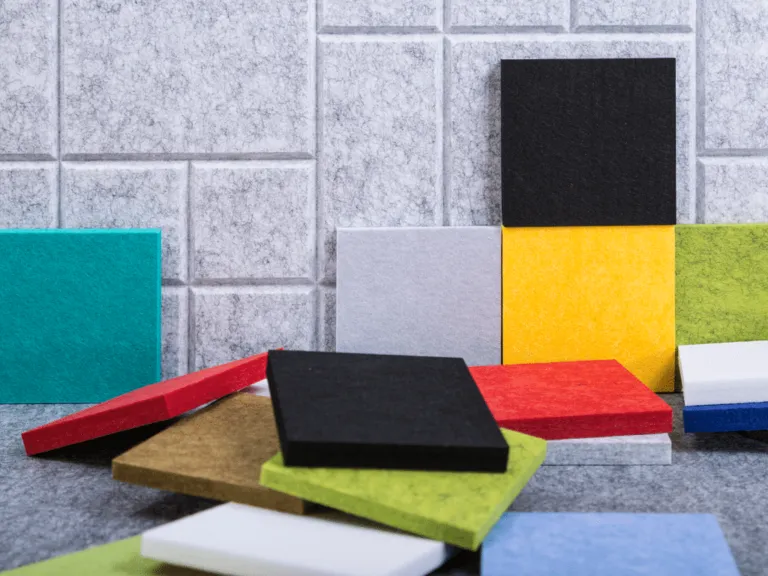
Acousticians have a wide range of materials at their disposal to create an optimal acoustic environment.
They select materials based on their properties within certain frequency ranges, as well as their ability to provide sound insulation and improve sound quality.
Depending on frequency, materials such as wood, rock wool, glass wool, drywall (BA13), and bituminous membrane are used to create a perfect acoustic environment.
These materials are carefully configured to guarantee ideal sound across the following frequency range: 20Hz to 20kHz.
Thanks to their understanding of sound waves and their properties, acousticians can use these materials to create the perfect space for any application, whether it’s a recording studio, a performance hall, or a private home.
1. Acousticians have access to a variety of materials to help create a soundproofed environment
Acousticians are tasked with creating a soundproofed environment, and they have a range of materials at their disposal to do so.
Depending on the frequency range, different materials can be used, such as wood, rock wool, glass wool, drywall (BA13), and bituminous membrane.
These materials are carefully configured to guarantee ideal sound across every frequency range.
This includes frequencies from 20Hz to 20kHz.
It’s essential for acousticians to understand the acoustic properties of each material in order to create the most effective sound insulation in any acoustic environment.
2. Different materials are used for different frequency ranges, such as wood for 20Hz to 100Hz and rock wool for 100Hz to 250Hz
Acousticians have a variety of materials available to insulate and create a perfect acoustic environment.
Depending on the frequency, different materials are used.
For frequency ranges between 20Hz and 100Hz, wood is the material of choice due to its sound-absorbing qualities.
For frequency ranges between 100 and 250Hz, rock wool is used for its superior sound absorption and insulation qualities.
Other materials, such as glass wool, drywall (BA13), and bituminous membrane, are used for frequency ranges between 250Hz and 20kHz.
Careful configuration and selection of the right materials deliver ideal sound across any frequency range.
3. Glass wool, drywall (BA13), and bituminous membrane can also be used in the 250Hz to 10kHz range
Acousticians have a whole range of materials at their disposal to insulate and create a perfect acoustic environment.
Depending on frequency, materials such as wood, rock wool, glass wool, drywall (BA13), and bituminous membrane can be used to guarantee ideal sound across the 250Hz to 10kHz range.
These materials are carefully configured to minimize sound waves that don’t require insulation and maximize those that do.
This technique delivers a genuine acoustic experience, free of distortion or interference.
4. For the highest frequency range, 10kHz to 20kHz, specific materials are used to guarantee ideal sound
For the highest frequency range, from 10kHz to 20kHz, specific materials are chosen to guarantee optimal sound.
These materials are designed to absorb sound waves and vibrations, and must be carefully configured to achieve the desired result.
In this frequency range, acousticians often use materials such as wood, rock wool, glass wool, drywall (BA13), and bituminous membrane.
Combined, these materials create an ideal acoustic environment capable of handling the highest frequencies.
5. Careful configuration of materials is essential to creating a soundproofed space
To create a soundproofed space, careful configuration of materials is essential.
Acousticians have a range of materials available to insulate and create a perfect acoustic environment.
Depending on frequency, materials such as wood, rock wool, glass wool, drywall (BA13), and bituminous membrane are used and carefully configured to guarantee ideal sound across the 20Hz to 20kHz range.
Precise measurements and calculations are carried out to ensure maximum sound insulation and optimal sound quality.
6. Experienced acousticians are able to select the materials best suited to the frequency range in question
Experienced acousticians are well versed in material selection, since different materials are better suited to different frequency ranges.
For example, materials such as wood, rock wool, glass wool, drywall (BA13), and bituminous membrane are generally used for frequencies ranging from 20Hz to 20kHz, respectively.
Acousticians are able to select the materials best suited to a given frequency range in order to create a perfect acoustic environment.
7. Sound insulation can help reduce unwanted noise and improve sound quality
Sound insulation is one of the most important elements in creating a perfect acoustic environment.
By reducing unwanted noise and improving sound quality, acousticians can use a range of materials such as wood, rock wool, glass wool, drywall (BA13), and bituminous membrane to create insulation tailored to a specific frequency range.
This optimizes sound across the following frequency range: 20Hz to 20kHz.
This helps create the best possible environment for speech and music.
8. Creating perfect acoustics
Acousticians have a wide range of materials available that can be used to insulate and create a perfect acoustic environment.
Depending on frequency, materials such as wood, rock wool, glass wool, drywall (BA13), and bituminous membrane are configured and carefully arranged to guarantee optimal acoustic performance across the following frequency range: 20Hz to 20kHz.
In addition, materials can be adapted to the specific needs of the room, such as size, shape, sound absorption, diffusion, and reverberation.
Once the materials are in place, the acoustician can fine-tune the settings to achieve perfect acoustics.
In conclusion, acousticians have a variety of materials at their disposal to create a perfect acoustic environment.
By carefully choosing the right materials and configuring them correctly, they can ensure sound is optimized for every frequency range.
By using the highest-quality materials, acousticians can ensure the sound produced meets their standards of quality and clarity.
With the right combination of materials, acousticians can create a space that is both comfortable and acoustically sound.