AI Voice or Human Voice: Which Should You Choose for Your 2023 Audiovisual Projects
AI technology has become increasingly important across many industries, including the audiovisual sector. With the rise of AI voice technology, many professionals are considering adopting it for their projects …
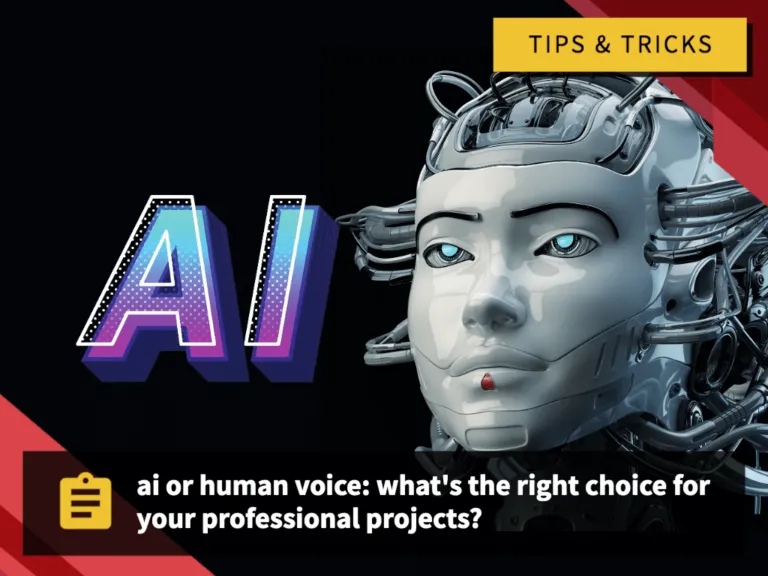
AI technology has become increasingly important across many industries, including the audiovisual sector.
With the rise of AI voice technology, many professionals are considering bringing it into their audiovisual projects.
Yet the question remains: which is better, an AI voice or a human voiceover?
In this blog post, we’ll explore the pros and cons of using an AI voice versus a human voiceover for your professional audiovisual projects in 2023.
On one hand, AI voices offer a level of convenience and efficiency in the production process, since they require less time and fewer resources than hiring a human voice actor.
The quality and consistency of an AI voice also remain constant throughout a project, which can be an advantage for work that requires a large volume of narration or dialogue.
On the other hand, human voiceovers bring a level of authenticity and emotional connection with the audience that AI voices can lack.
Human voices convey subtle nuances of tone, inflection and rhythm that are essential to creating a powerful impact on the viewer.
Human voiceovers can also be tailored to a project’s specific needs, for instance by incorporating regional accents or dialects.
That said, the drawback of using human voiceovers is the risk of inconsistency in quality and availability.
Finding the right voice can be a lengthy and costly process, and there’s always the risk of depending on a single person who might not be available for other projects.
Ultimately, the decision to use an AI voice or a human voiceover will depend on the specific needs and goals of each project, as well as the resources available to the production team.
1. AI voice: consistent and efficient.
When it comes to creating professional audiovisual projects in 2023, one advantage of using an AI voice is its consistency and efficiency.
Unlike human voiceovers, an AI voice can deliver a standardized, predictable tone and pace that helps maintain the project’s consistency and brand identity.
AI voice technology can also be trained to convey emotion and nuance effectively, offering a more engaging and compelling experience for the audience.
This consistency and efficiency can also save time and resources, since an artificial voice can generate content quickly and efficiently without requiring lengthy recording or editing sessions.
However, it’s worth noting that an AI voice can lack the personality and authenticity that a human voice artist brings to a project, which can be a drawback in contexts where a personal touch is desired.
Ultimately, the decision to use an AI voice or a human voice artist will depend on the project’s specific goals and needs, as well as the target audience’s preferences.
2. Human voice: authentic and expressive.
One of the main advantages of using a human voiceover for your professional audiovisual projects in 2023 is the authenticity and expressiveness it brings.
As humans, our voices convey a wide range of emotions and nuances that an AI voice may struggle to replicate.
A human voice can bring personality, warmth and character to your project, making it more engaging and compelling for your audience. A human voice can also adapt to shifts in tone, pace and accent depending on the context and mood of your project.
All of these factors can help create a lasting impression on your viewers and increase the odds that your project will be well received and successful.
That said, it’s worth noting that using a human voiceover can also come with higher costs, longer production times, and potential scheduling conflicts you’ll need to account for.
3. AI voice: customization and scalability.
One advantage of using an artificial voice for audiovisual projects is the ability to customize and adapt the content.
With an AI voice, it’s possible to create personalized content for individual users and audiences based on their preferences, demographics and behavior.
AI technology can analyze data and generate unique content in real time, offering each user a personalized experience.
The scalability of AI technology also makes it possible to produce large volumes of content in a short amount of time, making it an efficient solution for businesses facing tight deadlines or limited resources.
That said, it’s essential to note that AI voices may still lack the natural intonation and emotional depth of a human voiceover, which can affect the overall quality of the audiovisual project.
It’s therefore essential to carefully weigh the pros and cons of using an AI voice versus a human voiceover, based on the project’s specific needs and goals.
4. Human voice: emotional connection and nuance.
The human voice has always been a powerful communication tool, creating an emotional bond between speaker and listener.
Unlike AI-generated voices, a human voiceover can convey nuanced emotion, tone and timing that align precisely with the message an audiovisual project is trying to deliver.
This matters especially in a professional setting, where a project’s tone and mood directly shape how the audience perceives a brand or organization.
A human voiceover can bring personality and authenticity, making the project more relatable and engaging.
However, using a human voiceover can also come with drawbacks, such as cost and availability.
A professional voice actor may command a higher rate, and finding the right performer with the perfect tone and delivery can take time.
Even so, the benefits of using a human voiceover, particularly the emotional connection and nuance, shouldn’t be overlooked when considering the success of a professional audiovisual project.
5. Artificial voice: cost-effectiveness and speed.
One advantage of using an artificial voiceover for professional audiovisual projects is its cost-effectiveness and speed.
Thanks to advances in AI technology, creating an artificial voiceover has become increasingly accessible and affordable.
This means businesses can save on the cost of hiring a voice actor or dubbing artist.
Another advantage is the speed at which the voiceover can be generated.
With an AI voice, there’s no need to wait for a human actor’s availability or schedule recording sessions.
This can significantly cut production time and enable faster delivery of the final product.
That said, it’s important to note that not all AI voices are created equal, and some can sound robotic or unnatural, which can negatively affect the overall quality of the audiovisual project.
6. Human voice: high quality and memorability.
When it comes to audiovisual projects, the human voice offers a level of quality and memorability that an artificial voice simply can’t match.
A human voiceover has the ability to convey emotions and nuances that an artificial voice cannot reproduce.
This matters especially for projects that call for a personal touch, such as advertisements, documentaries and corporate videos. Viewers are more likely to remember and engage with content delivered by a human voice, since it creates a stronger bond and leaves a lasting impression.
A professional voice actor can also bring a level of expertise and experience that an artificial voice cannot provide, ensuring a polished and effective final product.
That said, it’s worth noting that using a human voiceover can come at a higher cost and require more time for recording and editing, both important factors to weigh when choosing between an AI voice and a human voice.
7. AI voice: limited intonation and inflection.
When it comes to professional audiovisual projects, one key question is whether to use an AI voice or a human voiceover.
While AI technology has advanced considerably in recent years, it’s important to consider the limitations of AI voices compared to human voiceovers.
One particular drawback of AI voices is their limited ability to convey emotion through intonation and inflection.
While AI voices may be able to read a script accurately, they lack the nuance and emotion that a human voiceover can bring.
This limitation can matter a great deal in projects where the tone and emotional impact of the audio is a key factor in the project’s success.
8. Human voice: time-consuming and costly.
When it comes to audiovisual projects, choosing between an AI voice and a human voiceover can be a tough call.
One of the main advantages of using a human voiceover is that it can add a level of authenticity and personality to your project that an AI voice simply cannot replicate.
However, it’s worth noting that recording a human voice can be a lengthy and costly process.
A human voiceover requires hiring a voice actor, scheduling recording sessions, and possibly booking studio time.
Not only is this time-consuming, it can also represent a significant expense for smaller projects or businesses with a limited budget.
What’s more, if changes or edits need to be made to the voiceover, this can require additional recording sessions and added costs.
Ultimately, while a human voice can add a certain level of quality to your audiovisual project, it’s important to weigh the cost and time involved before making a decision.
9. Artificial voice: risk of errors.
One drawback of using an artificial voice in audiovisual projects is the risk of errors.
While AI technology has made great strides in producing human-like voices, it still lacks the nuances and emotional variation that human voices naturally possess.
This can result in speech that sounds robotic and monotone, which can be unpleasant to listen to.
AI voices can also mispronounce words or stumble over accents and dialects, which can be especially problematic in projects that require technical or industry-specific terminology.
Human voiceover artists, on the other hand, can deliver a more authentic and engaging performance, bringing a level of personality and emotion to the project that AI voices cannot replicate.
Ultimately, the decision to use an AI voice or a human voiceover in your audiovisual project should depend on the project’s specific needs and the preferences of the target audience.
- Human voice: requires professional expertise.
When it comes to creating audiovisual projects, the human voice brings a level of professionalism and expertise that an artificial voice cannot replicate.
Nuances of tone, intonation and inflection are difficult for machines to imitate, and a human voice actor can bring a level of emotion and authenticity to a project that’s hard for AI to reproduce.
That said, it’s worth noting that a human voiceover requires professional expertise.
Voice actors need more than a pleasant voice — they also need proper diction, pronunciation and enunciation to ensure the message comes across clearly and effectively.
A professional voice actor will also be able to adapt their tone and pacing to match the project’s style and mood, further strengthening its impact.
While using AI voices can be more cost-effective and efficient, the benefits of a human voiceover cannot be overstated in a professional setting.
In conclusion, both AI voices and human voiceovers come with advantages and drawbacks for audiovisual projects.
While AI voices can save money and be customized to a specific project, they can lack the natural inflection and emotion that human voiceovers offer.
On the other hand, human voiceovers can be more costly and time-consuming to produce, but their ability to convey emotion and build a personal connection with viewers can have a significant impact on a project’s success.
Ultimately, the decision to use an AI voice or a human voiceover should be based on the project’s specific needs and goals, as well as the target audience and the message you want to convey.